Nov 16

This is a random observation while listening to some on a pair of good headphones:

We like to in hindsight attribute the success of disruptive products to practicality when in truth these products succeeded because they elicited some previously-impossible emotional experience in their user.
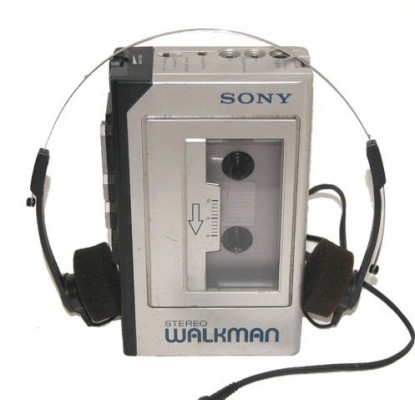
Here’s the crux of the epiphany: When I was eight I got one of the very first Sony Walkman’s (this is the closest pic I could find but I swear mine was even more old school). I had a bunch of teeth pulled right when this miraculous device debuted and my parents figured it would a good distraction to fill my head with music during the recovery period. This turned out to be a genius move on their part and worked really well. In spite of having awful pain from every corner of my mouth, this new incredible way to experience music trumped everything and transported me beyond the pain. Now here’s why this is relevant:

Clayton Christensen (and by proxy many others) have cited the Sony Walkman in their explanations of disruption usually saying something to this effect: “The Walkman achieved disruption because it enabled young people to listen to music out of earshot of their parents for the first time.” This is a functional/practical motivation (ie. listening privacy, facilitated quiet rebellion) and while it may partially account for its success, I would submit that there was a more fundamental emotional-based motivation: “it enabled for the first time the undeniably cool & irreproducible experience to have music originate from between one’s ears.” This is akin to experiencing dry ice, static electricity or pop rocks for the first time- it’s just freakin’ cool!

No doubt practical motivations overtake the cool factor at some point and most disruptive products with any longevity can’t subsist indefinitely on coolness alone. But in the vast majority of past product success analysis from today’s vantage point, the coolness factor gets way undervalued. The ubiquity of white earbuds now makes it difficult for us to imagine thirty years back to a time when experiencing music that originated between your ears instead of from external speakers was as untangible as anti-matter & black holes are to us today.

Anyways, there’s no call-to-action here other than to observe that our “coolness bar” is perpetually raised higher each year and it’s impossible to see those case study products via the same lens of wonderment we would have had at the time they presented. I don’t dispute Christensen’s ideas on disruption re: underserved markets, competing against non-consumption, etc. but I think we need as entrepreneurs to acknowledge the role of a more parsimonious “I just gotta have the music inside my head!” motivation in explaining the success of a product like the Walkman.

No doubt when Apple someday develops the ability to deliver any smell on demand via the appstore, we’ll all run out and purchase an iSniff because “I gotta have any smell on demand!” And years afterwards the business historians will all concoct elaborate theories about the runaway success of this product explaining how we were economically-motivated and seeking to reduce trips to flower stores.
Oct 04

Ok here’s a plea for any developer who knows how to write browser extensions to write one that lets me do basic spreadsheet operations right in the web page. I would pay $20 for this add-on in its most basic buggy incarnation and up to $50-75 for a pro edition depending on how well it worked. Here’s the issue:

It’s too cumbersome to ask simple questions and do basic data wrangling of tabular numbered data in web pages.

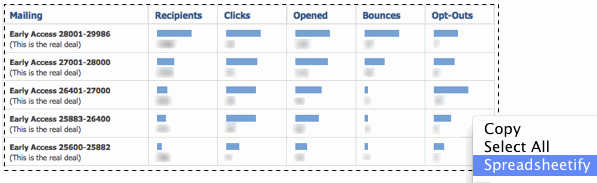
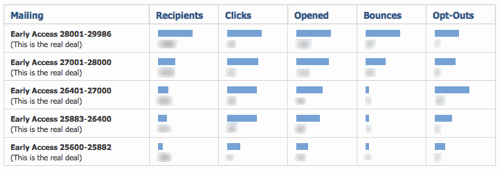
I play with data probably five times a day via various web sites (sometimes our own, sometimes ones in the wild). Here’s a practical example from right now- we’re running some email campaigns for and I get this report:

Which is just a set of numbers and has no meaning until you can see relative %’s and how campaigns compare across iterations. I would like to be able to quickly calculate the open rate, CTR and bounce rates of each of these five campaigns. And then get average totaled across all mailings.

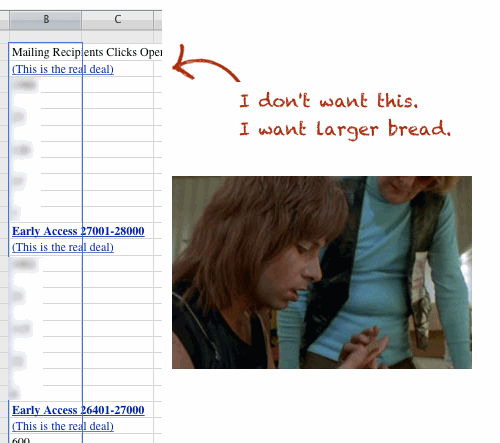
Now sometimes you luck out and can copy/paste the table into Excel or Numbers and do basic summing / averaging / math ops there. But it’s a crapshoot – half the time it pastes the entire table into a single column which makes it useless. You wind up w/ this:

(sorry if you haven’t seen this Spinal Tap scene that bread reference will make no sense at all).

Pasting to a desktop app makes you leave the browser and adds just enough friction to the process to where you might not ask a question of the data that you would have otherwise. Google Docs is getting us closer and their copy/paste tends to work better, but that too is still an extra step and cumbersome & flakey. The other alternative on small datasets like this is to Command-Space to open Spotlight and manually run some calculations there typing in the numbers. But alas that sucks as well.

What would be truly spectacular is a FF or Chrome extension that gave me this right in the context of the web page:

aaaand… boom:

Select. Click. Done. Two motions to get immediate insight into tabular data on web pages. Like I said, I’d pay $20 no question for the basic version and if you start adding spiffy extra spreadsheet functionality, that number goes up to $50 and beyond very quickly. This is a valuable/painful enough situation where it would be pretty easy to make me happy even with a crappy extension.

So my question is “would you pay for such an extension?” Heck, I’ll setup a Pledgebank and hire a programmer to create this if enough people want it. I think it could do miracles for startup founders in terms of wiping out the friction associated with casually asking questions of data in web pages. My hunch is some developer could give away the very most basic version and charge a grip for the professional edition similar to how iMacros has done it. Leave a comment or a tweetback if this is something you’d use.

Aug 31

I attended Jason Baer’s Facebook Marketing seminar at NACET last week. Usually these social media marketing seminars are fluff or so remedial they don’t yield any new insight. But Jason was extremely knowledgeable and I learned a couple interesting things from his talk and discovered a few sites and services that appear very useful. In all it made me realize we’re under-utilizing Facebook for our startups and need to implement a FB strategy going forward. Below are my notes and links to the relevant sources:

Five Different strategies to take with FB

Awareness - new Facebook page that actually collects emails - "win the news feed" x-factors - high target interaction weight - edgerank formula seems similar to HN "gravity" algorithm - Pagelever for better FB metrics (Edgerank checker = low end) Increase Sales - ShopTab.net from Phx do this well (like CartFly?) - Direct response = higher end Market research & insight generation - Liking page = expression of support (equiv digital bumper sticking). - intersperse q's to keep interactive and prevent feed fatigue ** play with polls more to activate people - Bulbstorm / idea challenges- good eg. ^ <- nother Phx co! ** investigate ExactTarget Customer Service - listen proactively, worst case = have a page and not attend - deleting neg comments is hugely detrimental, only if hate speech etc **** Kurrently realtime Twitter & Facebook monitoring - use discussions tab as a place to take discussions off the Wall. - key to establish hours of operation just like phone CSR's. ground rules for posting Fifth ^missed it - maybe someone else who was there can comment?
Tagged with:
Aug 23

I discovered Nate Stone about a month back randomly while working in a coffee shop in Flagstaff. I was fortunate to catch this performance he did this past Sunday of my favorite song of his:

I had a beer with him afterwards and he declared “this is the night I got my voice back.” I know the feeling of what it’s like to have been super prolific at writing music and then lose the spark. It was pretty magical to be present and witness him get the spark back. There was only maybe five people in the whole place but you could hear the responses from people when it kicked in for him.

Download his last album for free here. He said he’s got material in the works to record a new album. I cannot wait to hear what this guy puts out next. If you’re in the Flagstaff area he plays resident every Sunday night 7-9pm at Coffee Bean.

To see other guys like Nate (not necessarily from AZ) check this list I made awhile back. The Interwebs have apparently deemed it #1 google result for “acoustic artist” for whatever that’s worth.

Aug 21

I want to make a public apology for writing this post a few days ago. Stressful times but no excuse. I understand what happened now and this was a misunderstanding on my part. For anyone that cares here’s exactly what went down:

  • I had pre-ordered Eric’s book before SXSW and just assumed I had elected to receive the digital version.
  • I didn’t realize that his book was included in the AppSumo bundle I purchased at SXSW (cool). AppSumo apparently mistakenly advertised it as including the digital edition.
  • Eric’s email a few days ago was clarifying the mixup and just getting mailing addresses from the people that purchased the AppSumo bundle. I interpreted it as him just changing his mind and choosing not to make a digital edition that had been offered via his site and that I had purchased.

So basically I’m an ass for making that post earlier and jumping to assumptions before doing proper fact checking. Now that I understand the situation I feel bad and sincerely apologize. Eric, I’m sorry. Looking forward to reading your book. It’s an important work.

Tagged with:
Aug 19

Apologies for the rant in advance but this is a bigger topic than the title implies.

I had pre-ordered Eric’s book many months back because I’m interested in the lessons but also largely out of sheer support for CustDev/Lean startup movements. These are important concepts. The mysterious art of entrepreneurship is finally getting codified into a repeatable framework. IMO this is one of the more promising developments in terms of advancements that has the most potential to restore our economy from the shitter.

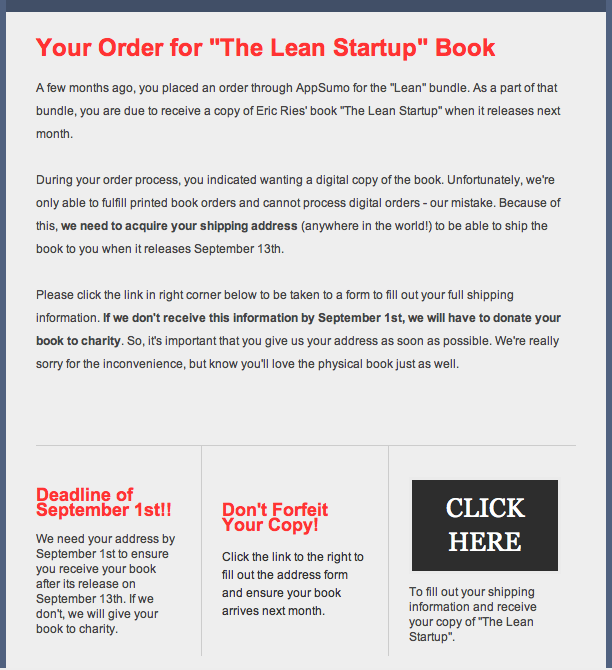
So I was surprised this email from Eric this morning:

Now arguably this is a trivial thing. Being nomadic & virtual I’m trying to slim down and have less physical stuff so I’d prefer the digital version I ordered, but barring the existence of that, I’ll take the hardcover. The stance taken here though seems pretty absurd. If somebody pre-orders a hotdog from you and you decide not to make it for some reason, you can’t simply insist that they accept a burger. What’s worse, it’s not even like he ran out of hotdogs, he just seemingly decided not to make them.

Again, in the grand scheme, not a big deal and I’m far more interested in the content so we can apply the relevant lessons to our . But what’s troubling is I’ve noticed a theme developing (Eric sorry to call you out personally as the example here) where founders are so immersed in conversion funnels and A/B testing and cohort analysis that they forget the basics of running a hotdog stand. This is the guy who (2nd to Steve Blank IMO) is in a position to massively influence the next generation of entrepreneurs and he has this approach to something as fundamental as basic customer service

Here’s a novel idea Eric: explain the situation and why you’ve chosen not to make the digital edition and realize that 98% of people will be fine with the hardcover. But give folks a choice for a refund if you can’t deliver the product they purchased. To insist that they accept a substitute with a 2wk ultimatum that they’ll otherwise forfeit their money – not how you do it dude.

Tagged with:
preload preload preload